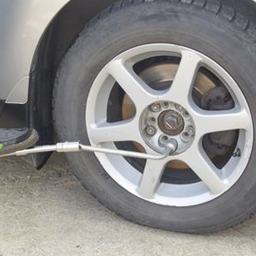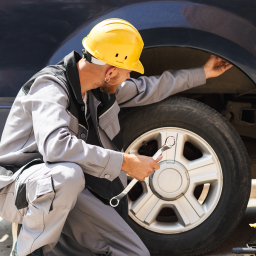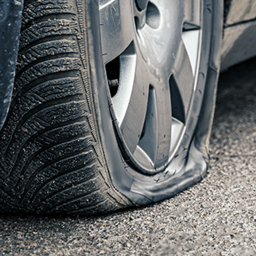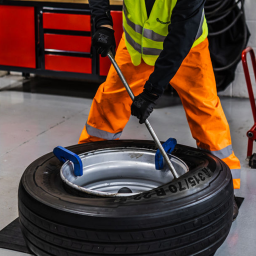
A tyre puncture can happen without warning. A nail, screw, piece of glass, pothole, or damaged valve can cause air to escape and leave you with a flat or slowly deflating tyre. While some punctures can be repaired, others require complete tyre replacement. Knowing how to recognise a puncture and understanding when tyre puncture repair is possible can help you make safer decisions when something goes wrong.
TyreSafe’s latest guide explains that punctures can cause either rapid or gradual air loss and should be assessed by a tyre professional.
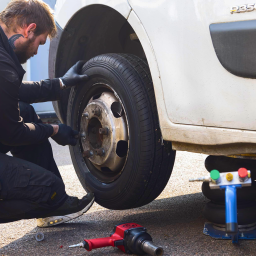
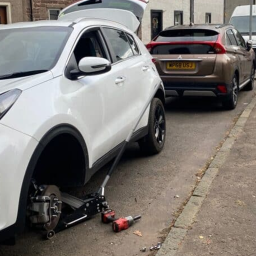
At Grip N Go Mobile Tyres, we provide professional mobile tyre repair, puncture repair, replacement, and fitting services, helping drivers deal with tyre problems conveniently at their location.
What Is a Tyre Puncture?
A puncture occurs when air escapes from inside the tyre through a hole or abnormality in its structure. Depending on the size and location of the damage, the tyre can lose air rapidly or gradually.
A sudden puncture can leave you with a completely flat tyre within minutes. A slow puncture, however, may take days or even weeks before you notice something is wrong.
Either way, you should not ignore a suspected puncture.
What Causes Tyre Punctures?
Several common road hazards can cause a puncture.
Nails, Screws and Sharp Objects
Nails, screws, broken glass, and other sharp debris can penetrate the tread and create a path for air to escape. TyreSafe identifies sharp objects as one of the common causes of slow punctures.
Sometimes the object remains lodged in the tyre, making the problem less obvious.
Potholes and Kerbs
A strong impact with a pothole or kerb can damage more than the tyre. It may also affect the wheel rim or sidewall, potentially causing air to escape.
Therefore, if you notice pressure loss after hitting a pothole, arrange a professional inspection.
Damaged Tyre Valves
The valve can also contribute to a slow puncture. A faulty or damaged valve may allow air to escape gradually.
This means a tyre that repeatedly loses pressure doesn’t necessarily have a visible nail or screw in it.
How Can You Tell If You Have a Puncture?
A puncture doesn’t always result in an immediately flat tyre.
Signs of a puncture can include:
- Your vehicle pulling or drifting to one side
- Shaking or vibration through the steering wheel
- An unusual ticking or hissing sound
- A tyre that repeatedly loses pressure
- Changes in steering or cornering
- A tyre pressure warning light
TyreSafe notes that some of these symptoms can also indicate low pressure, uneven wear, wheel alignment problems, or other vehicle issues.
Therefore, professional inspection is important when you’re unsure about the cause.
What Is a Slow Puncture?
A slow puncture allows air to escape gradually rather than causing an immediate flat tyre.
This makes slow punctures particularly easy to overlook.
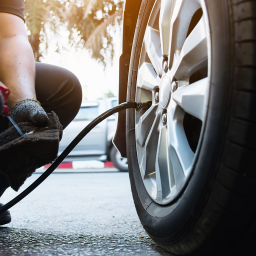
You might notice that you need to inflate the same tyre more frequently than the others. Although the vehicle may still feel normal, repeatedly losing pressure indicates that something needs attention.
A slow puncture can be caused by a nail or screw, damaged valve, pothole impact, wheel damage, or another tyre problem.
Don’t simply keep adding air and continue driving indefinitely. Have the tyre checked by a professional.
Can You Drive on a Punctured Tyre?
Generally, you should avoid driving unnecessarily on a punctured or deflated tyre.
Continuing to drive can potentially damage the tyre’s internal structure and, in some situations, the wheel itself.
If you experience a puncture while driving, prioritise your safety. TyreSafe advises drivers not to attempt roadside tyre changes in dangerous locations and recommends moving to a safe place where possible and contacting appropriate breakdown assistance.
If you’re on a motorway or another high-speed road, never put yourself at unnecessary risk by attempting to repair the tyre beside moving traffic.
Can a Tyre Puncture Be Repaired?
Yes, some punctures can be repaired, but not every punctured tyre is suitable for repair.
The decision depends on several factors, including:
- Where the puncture is located
- The size and type of damage
- The condition of the tyre
- Tread depth
- Previous repairs
- Whether the tyre has been driven while underinflated
- The type of tyre
TyreSafe states that repairs should follow the relevant British Standard, BS AU 159.
A professional must assess the tyre before deciding whether repair is safe.
Where Can a Tyre Puncture Be Repaired?
The location of the puncture is particularly important.
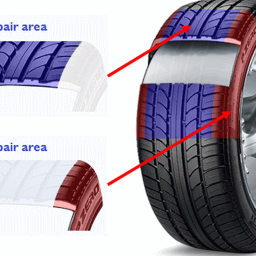
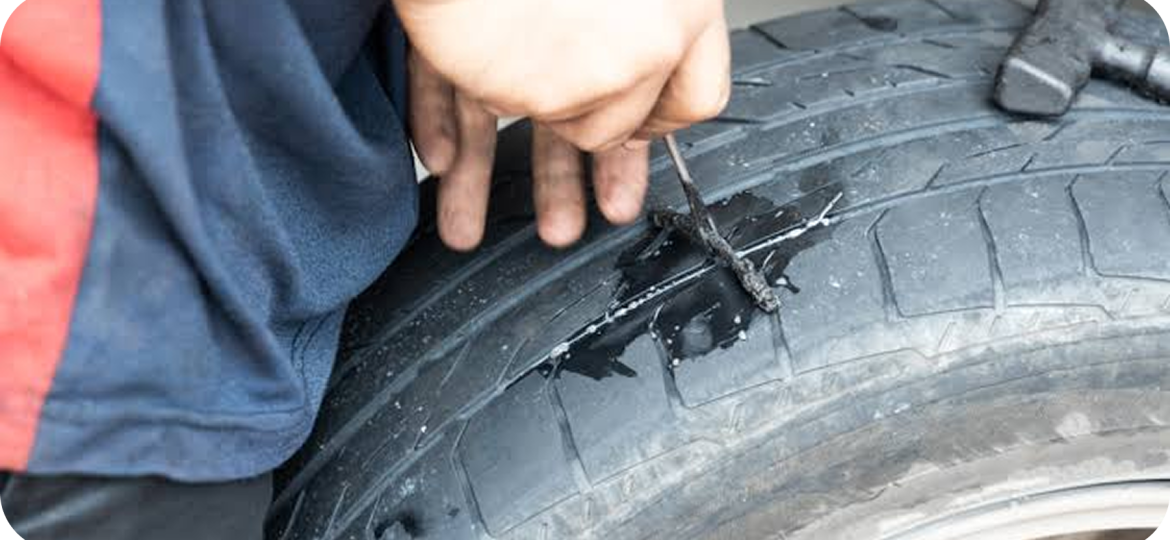
Tyre repairs are generally limited to the central three-quarters of the tyre’s tread area. Damage close to or on the sidewall cannot normally be repaired safely.
This is one reason why you shouldn’t rely on a simple plug or temporary repair without having the tyre professionally inspected.
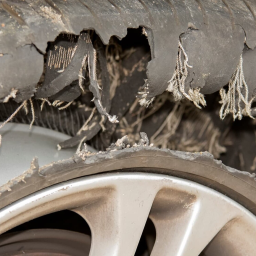
Sidewall damage can compromise the tyre’s structural integrity and may require replacement.
When Does a Tyre Need Replacing?
Sometimes tyre puncture repair isn’t possible.
A tyre may need replacement if it has:
- Sidewall damage
- Large cuts or splits
- Serious casing damage
- Bead damage
- Exposed cords
- Tread below the legal limit
- Severe deterioration
- Damage caused by running underinflated
- Unsafe previous repairs
- Signs of separation within the tyre structure
TyreSafe also explains that a tyre must be in otherwise good condition for a puncture repair to be considered suitable.
What About Run-Flat Tyres?
Run-flat tyres are designed to allow a vehicle to continue travelling for a limited distance after losing pressure. However, driving on a deflated run-flat can put significant stress on its structure.
TyreSafe notes that run-flat tyres can be difficult to assess visually when deflated and may become unsuitable for repair after being driven underinflated.
If you have run-flat tyres and experience a puncture, check your vehicle manufacturer’s guidance and arrange professional assessment.
What About Puncture Repair Kits?
Some vehicles don’t have spare wheels and instead come with emergency puncture repair kits.
These kits can provide a temporary solution in suitable circumstances, allowing you to reach professional assistance. However, they are not a permanent replacement for professional tyre repair.
If you use a repair kit, follow the manufacturer’s instructions carefully and arrange professional inspection as soon as possible.
Never attempt to use a puncture repair kit in an unsafe roadside location.
Professional Tyre Puncture Repair
A professional puncture repair involves more than simply sealing the visible hole.
TyreSafe explains that a permanent repair requires the tyre to be removed from the wheel so that its internal and external condition can be properly inspected for hidden damage.
This is important because driving on an underinflated tyre can potentially cause internal damage that isn’t visible from the outside.
A professional assessment therefore helps determine whether repair is safe or replacement is necessary.
Mobile Tyre Puncture Repair from Grip N Go
A puncture doesn’t always happen conveniently outside a tyre centre. You could discover a flat tyre at home, at work, in a car park, or while travelling.
That’s where mobile tyre services can make the process easier.
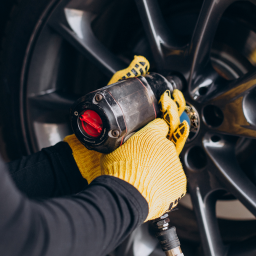
At Grip N Go Mobile Tyres, our team provides professional mobile tyre puncture repair and tyre replacement services. We can come to your location and assess the tyre, helping determine whether it can be repaired or needs replacing.
Our mobile services include:
- Mobile puncture repair
- Emergency tyre repair
- Mobile tyre replacement
- Emergency tyre replacement
- Mobile tyre fitting
- Roadside tyre assistance
If your tyre is unsafe to repair, our team can provide a replacement solution where suitable.
How to Prevent Tyre Punctures and Damage?
You cannot prevent every puncture, but regular tyre checks can help you identify problems early.
Check your tyres regularly for:
- Nails and screws
- Cuts and cracks
- Bulges
- Uneven wear
- Low pressure
- Damaged valves
- Insufficient tread depth
You should also check tyre pressure regularly and before long journeys.
If your vehicle hits a pothole or kerb heavily, inspect the tyre and wheel for damage rather than assuming everything is fine.
Final Thoughts
A puncture may look like a minor inconvenience, but ignoring it can create much bigger problems. From slow pressure loss to sudden tyre failure, getting a damaged tyre professionally assessed is always the safer approach.
Some punctures can be repaired when the damage, location, and overall tyre condition meet the relevant requirements. Others require complete replacement.
At Grip N Go Mobile Tyres, we provide professional mobile tyre puncture repair, tyre replacement, and mobile tyre fitting services. Our experienced team comes directly to your location, assesses the problem, and provides the appropriate solution.
If you’ve discovered a puncture, don’t risk driving unnecessarily on a damaged tyre. Get professional assistance and make sure your tyres are safe before continuing your journey.